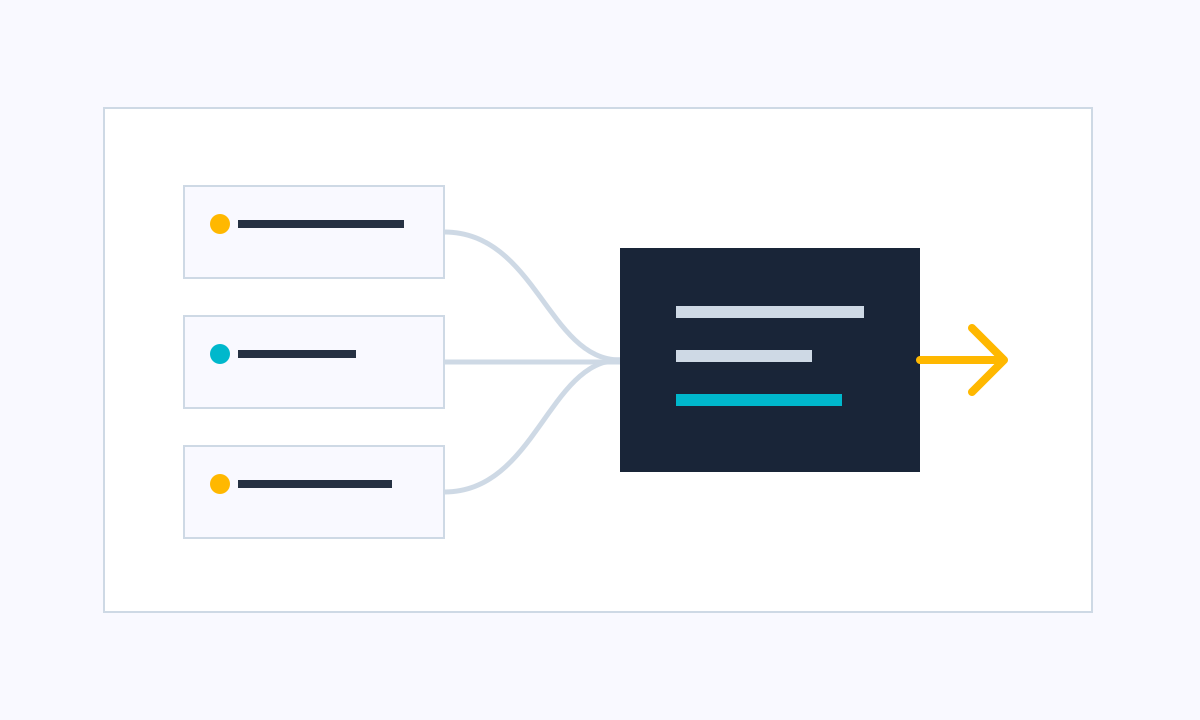
Enterprise AI projects depend on the quality of the data that feeds them. This seems obvious. Yet it is one of the hardest things to master.
Operational data is often spread across multiple systems, produced by different business units, updated according to heterogeneous rules and rarely governed end to end.
The problem of fragmented repositories
The same customer may exist multiple times.
A supplier may be named differently across systems.
A product may be described with incomplete attributes.
A piece of equipment may be linked to several identifiers.
A contract may depend on dispersed data.
These inconsistencies create chain effects: operational errors, contradictory analyses, riskier migrations, fragile automated processes, less reliable AI projects and difficulty auditing decisions.
AI makes data quality even more strategic
As long as data is used by humans, some errors can be caught by experience or intuition. When data feeds automation, that margin shrinks.
An AI can quickly produce results from false, incomplete or duplicated data. The problem is no longer just the incorrect data point. It is the speed at which the error can propagate.
What DUPLIK brings to the Adilian strategy
DUPLIK is Adilian's data pillar. It reconciles, consolidates, normalises and audits operational data to create more reliable repositories.
Its value goes beyond detecting duplicates. DUPLIK helps teams arbitrate, justify, track history and govern data quality decisions.
In Adilian's vision, data quality becomes a precondition for AI industrialisation.